Peaky Blinders Advertising Through the Years: From Streets to Screens
Peaky Blinders Advertising Through the Years: From Streets to Screens
A show that didn’t just live on screen
Few TV series have built a brand as powerful as Peaky Blinders. It wasn’t just the storytelling or the unforgettable performance of Cillian Murphy as Tommy Shelby that made it iconic. It was how the show stepped outside the screen and claimed real-world space.
Across the years, its marketing evolved into something much bigger than promotion. It became part of the culture itself.
Billboards that captured Tommy Shelby’s psyche
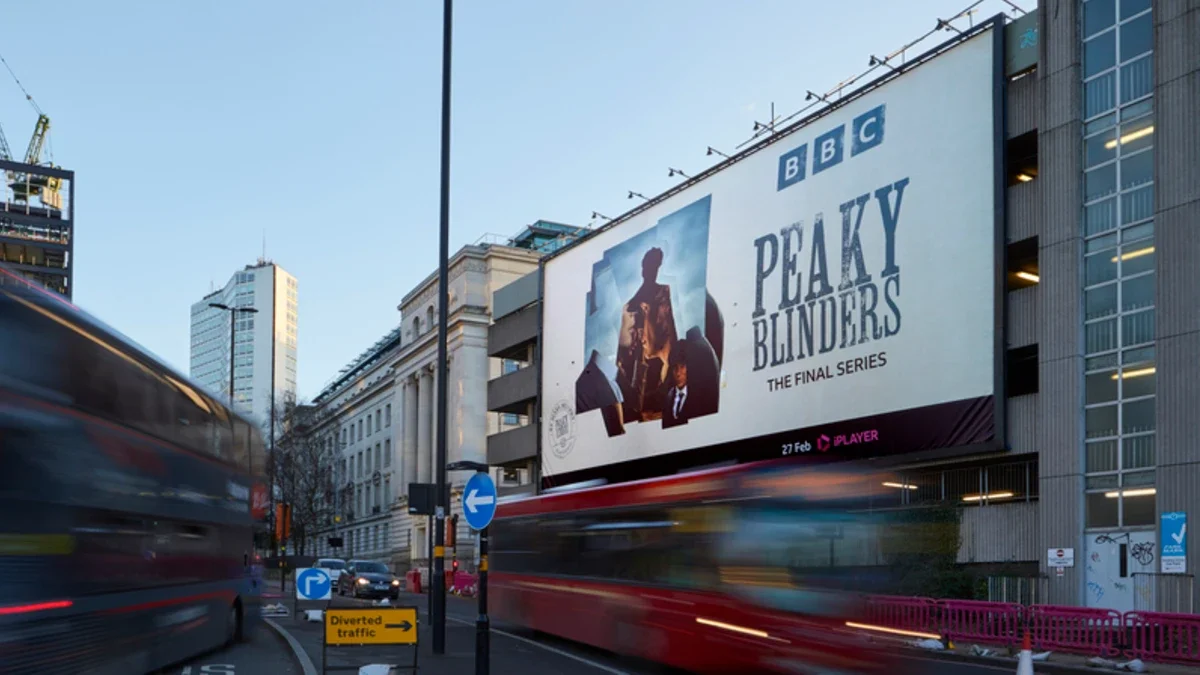
When the final series arrived, BBC Creative pushed things further with a visually striking OOH campaign titled Last Orders.
Instead of standard promotional artwork, artists were invited to interpret the complex psychology of Tommy Shelby. The result was a series of deeply expressive visuals displayed across nationwide billboards and digital screens.
These weren’t just adverts. They felt like art installations in public spaces. People didn’t just glance at them. They stopped, absorbed them, and remembered them.
This is where out-of-home advertising shines. It turns storytelling into something physical and impossible to ignore.
Taking over the London Underground
If there’s one place where attention is guaranteed, it’s the London Underground.
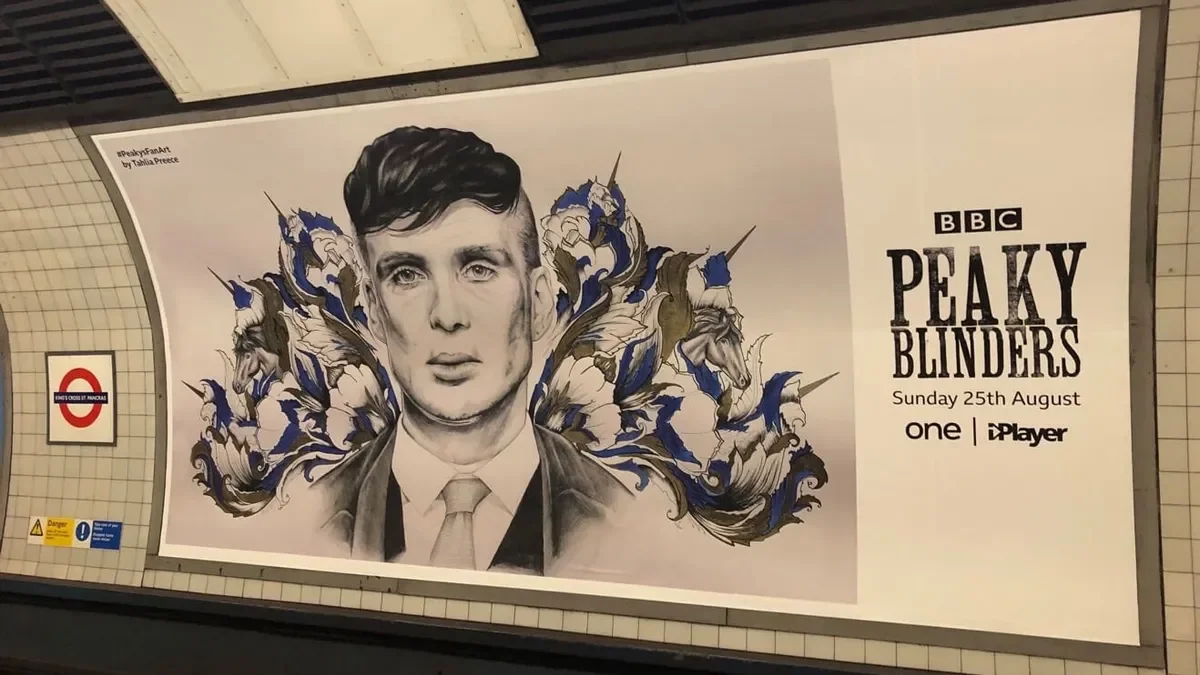
To promote Series 5, Peaky Blinders leaned into this space with a bold, fan-powered campaign. Creatives from across the UK submitted artwork, with the best pieces transformed into large-scale posters across key stations like:
Liverpool Street
London Bridge
King’s Cross St Pancras
The campaign featured dominant 48-sheet posters, placing characters like Tommy and Polly directly in front of hundreds of thousands of commuters.
This wasn’t passive advertising. It became part of people’s daily routine. Waiting for a train suddenly meant stepping into the world of Peaky Blinders.
And the results spoke for themselves. Streaming numbers surged, and the show strengthened its grip on younger audiences.
For brands, this is a reminder of how powerful transport advertising can be when done right. It reaches people when they’re alert, stationary, and surrounded by visual stimuli.
Murals that turned buildings into storytelling canvases
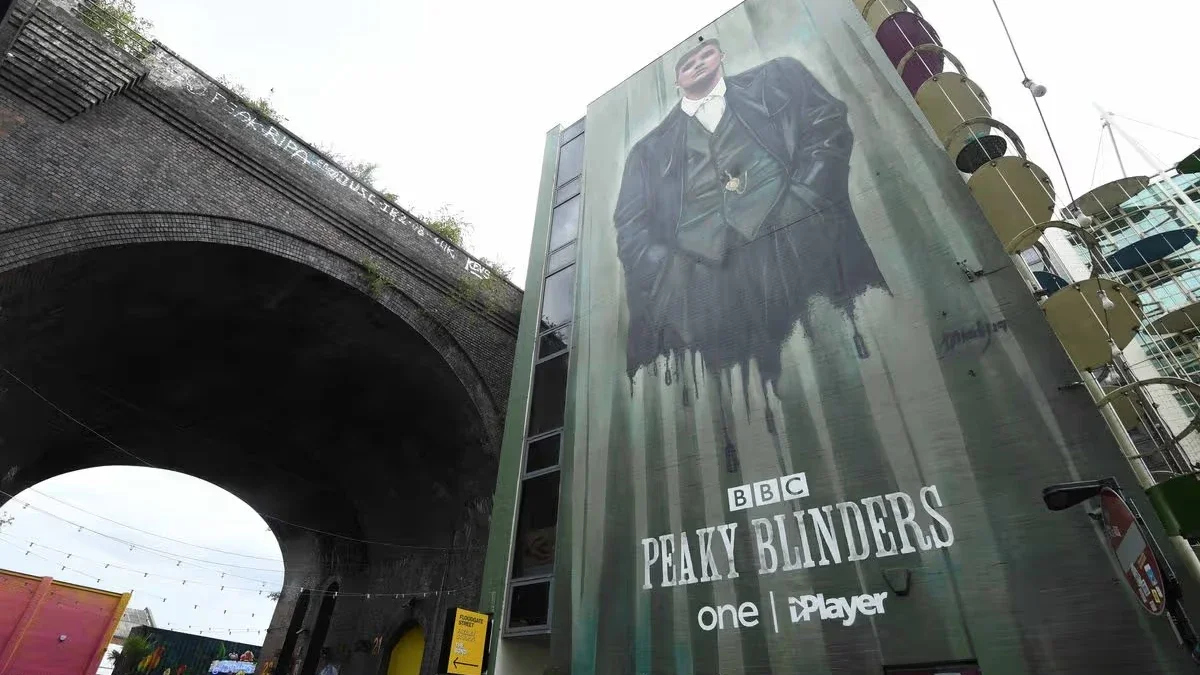
One of the most memorable moments in the show’s marketing came in Birmingham, its spiritual home.
A fan-designed portrait of Tommy Shelby was transformed into a 60-foot mural at the Custard Factory. Towering over the street, it became an instant landmark.
Murals like this do something traditional advertising cannot. They embed a brand into the identity of a place. People don’t just see them. They photograph them, share them, and talk about them.
It turns promotion into participation.
Global domination with giant posters
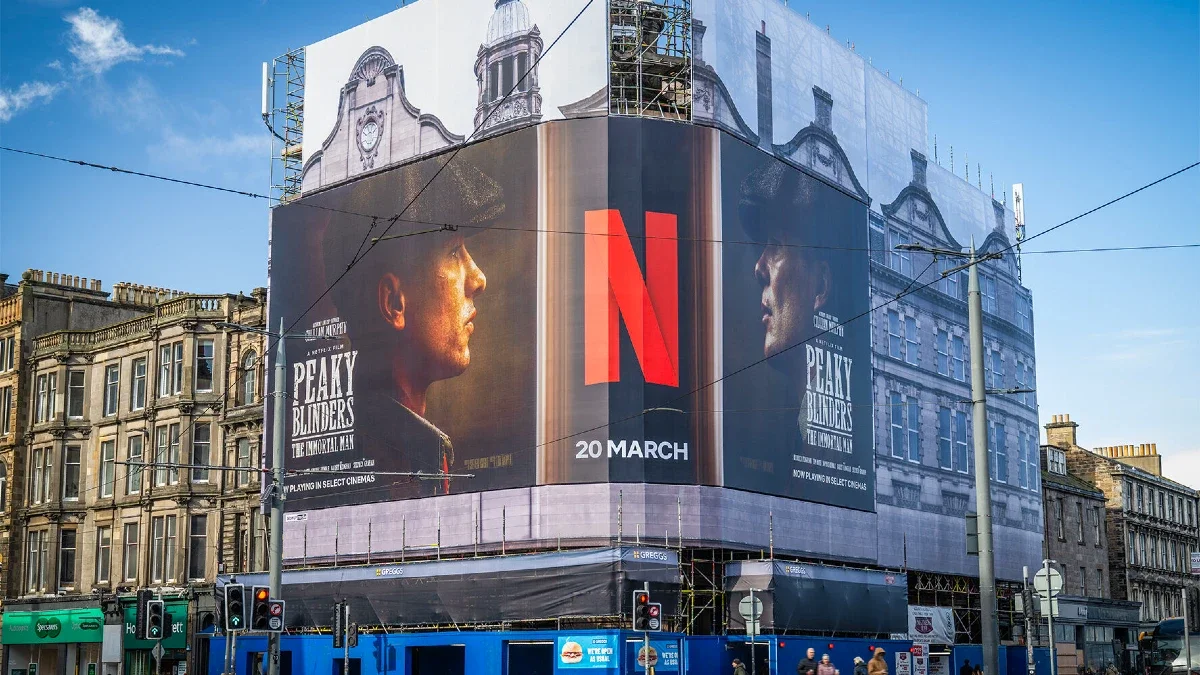
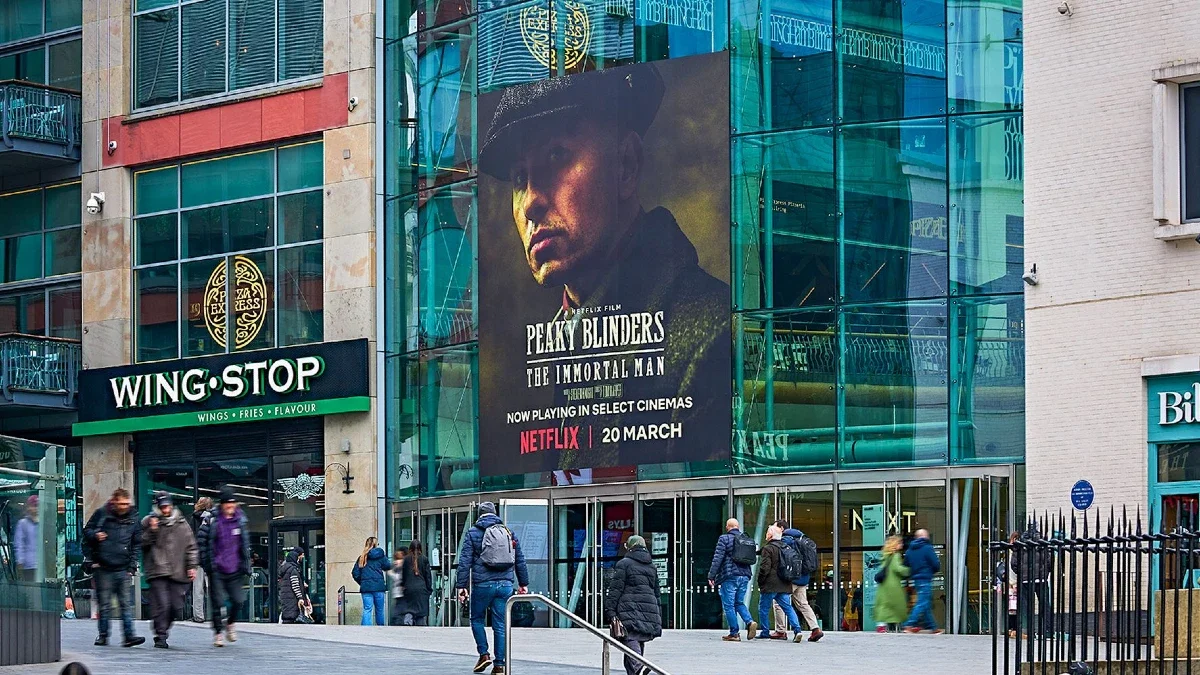
With the release of the new film, Peaky Blinders: The Immortal Man, the campaign expanded beyond the UK.
Massive building wraps and giant posters appeared across cities like Rotterdam, Birmingham, and other key European locations. These installations stretched across entire facades, creating an immersive visual experience.
The scale was intentional. A story as grand as Peaky Blinders needed a stage to match.
By combining multiple locations across countries, the campaign built a sense of global anticipation. It wasn’t just a release. It felt like an event.
Why this strategy worked so well
Peaky Blinders didn’t rely on one medium. It layered multiple formats together:
Traditional billboards for reach
Transport advertising for frequency
Murals for cultural impact
Giant posters for scale and spectacle
Each medium played a role in building the brand.
What made it effective was consistency. The tone, visuals, and identity remained unmistakably Peaky Blinders across every format.
That’s what brands should take away. It’s not just about being visible. It’s about being recognisable everywhere.
From Birmingham streets to global stages
What started as a British drama became a worldwide brand, and its advertising strategy played a huge part in that journey.
By stepping into real-world environments and owning them, Peaky Blinders blurred the line between fiction and reality.
For advertisers, it’s a clear lesson. When campaigns move beyond screens and into everyday life, they don’t just promote. They create presence.
If you’re looking to build that kind of impact for your brand across the UK, UAE, or globally, speak to us and start planning something unforgettable.
FAQs
Q1. What advertising channels did Peaky Blinders use?
They used a mix of billboards, London Underground ads, murals, and large-scale building wraps across multiple countries.
Q2. Why was the London Underground campaign so effective?
It placed the brand in high-footfall areas where commuters spend time waiting, increasing visibility and engagement.
Q3. Did Peaky Blinders use fan-generated content in advertising?
Yes, especially for Series 5, where fan artwork was selected and displayed across major locations.
Q4. How did murals help promote the show?
Murals created cultural landmarks, encouraging social sharing and deeper audience connection.
Q5. What can brands learn from Peaky Blinders advertising?
Using multiple OOH formats together and maintaining a strong, consistent identity can significantly boost brand impact.